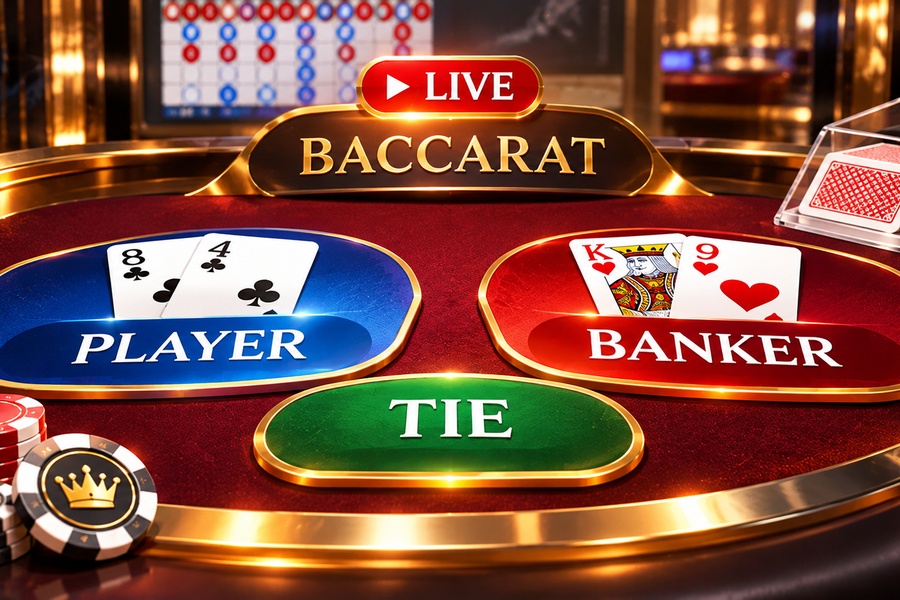
Baccarat has an air of elegance about it. For decades it was associated with high stakes rooms, tuxedos and quiet tension around a velvet table. Today, live baccarat brings that atmosphere to your phone or computer, with real dealers, real cards and professional studios streaming every hand in real time. Behind the glamour sits one of the simplest casino games to learn, which is exactly why live baccarat in Australia has become a favourite with players from every background.
This guide explains everything you need to enjoy live baccarat with confidence. It covers the three main bets, why the Banker bet carries a commission, how the drawing rules work, the different table styles you will find, how to read scorecards and why patterns on the board do not predict the next hand. You will also find tips for choosing a table and keeping your sessions balanced.
Why Baccarat Is So Popular
Baccarat has deep roots in Europe and became enormously popular across Asia, particularly in Macau, where it remains the most played table game. Many Australian players, including large Asian Australian communities, grew up with the game or discovered it in local casinos. Its appeal lies in simplicity. There are no complex decisions to make once your bet is placed, and each hand is decided in less than a minute.
Live baccarat in Australia has grown rapidly because it combines that simplicity with the social atmosphere of a real table. Watching cards being dealt by a human dealer adds tension and transparency that many players enjoy.
Another reason for its popularity is accessibility. Live baccarat in Australia is available around the clock, with tables offering a wide range of limits. Beginners can join low stakes tables to learn the flow of the game, while experienced players can move to higher limit or squeeze tables for a more dramatic experience. This flexibility means there is a table to suit almost every budget and style.
The Three Main Bets
Every hand of baccarat compares two hands, called Player and Banker. Despite the names, you do not play as either. You simply bet on which hand will finish closest to nine, or whether the two will tie.
Player
A bet on Player wins if the Player hand finishes closer to nine. It pays even money, so a 10 dollar bet returns 20 dollars including your stake. The house edge on Player is around 1.24 percent.
Banker
A bet on Banker wins if the Banker hand finishes closer to nine. Because the drawing rules give Banker a small advantage, casinos usually charge a 5 percent commission on Banker wins. Even with this commission, Banker has the lowest house edge of the main bets, at around 1.06 percent.
Tie
A Tie bet wins if both hands finish with the same total. It typically pays eight to one, which sounds attractive, but ties are rare and the house edge on this bet is much higher, around 14 percent. Most experienced players use it sparingly, if at all.
How Hands Are Valued
Cards from two to nine are worth their face value. Tens and picture cards are worth zero, and Aces are worth one. If a hand totals ten or more, only the last digit counts, so a seven and an eight make 15, which counts as five. The highest possible total is nine.
The Drawing Rules Made Simple
Both hands start with two cards. Whether a third card is drawn is decided automatically by fixed rules, so you never need to make a choice.
If either hand has a total of eight or nine with its first two cards, called a natural, both hands stand. Otherwise, the Player hand draws a third card on a total of zero to five and stands on six or seven. The Banker hand then follows a slightly more detailed set of rules that depend on its own total and the Player’s third card, if one was drawn.
You do not need to memorise these rules to play. The dealer and the game handle everything, but knowing the basics helps you follow the action.
Understanding the drawing rules also explains why the Banker bet has a slight edge. Because the Banker acts after the Player and its drawing decisions depend on the Player’s third card, it wins marginally more often. The 5 percent commission exists to balance that advantage, which is why Banker and Player end up with such similar house edges.
Table Styles You Will Find
Live baccarat comes in several styles, each with its own pace and atmosphere.
Standard Tables
Standard tables run at a relaxed pace, giving you time to place bets and watch each hand unfold. They are ideal for beginners and for players who enjoy a steady rhythm.
Speed Tables
Speed baccarat shortens betting times and deals hands quickly, often completing a round in under 30 seconds. These tables suit players who enjoy fast action, but the quicker pace also means more hands per hour, so budgeting becomes even more important.
Squeeze Tables
Squeeze baccarat adds drama by having the dealer slowly reveal cards, bending them to show the edges before turning them over. This style is especially popular with Asian players and creates suspense with every reveal.
No Commission Tables
Some tables remove the 5 percent commission on Banker wins but adjust the payout in specific situations, such as paying only half when Banker wins with a total of six. Checking the rules helps you understand how these tables differ.
Reading Scorecards and Roads
Most live baccarat tables display scorecards, often called roads, that record previous results. The Big Road, Bead Plate and derived roads show patterns of Player wins, Banker wins and ties in different visual formats. Many players enjoy following these boards, and they add to the culture of the game.
However, it is important to understand that each hand is independent. Cards are shuffled and dealt randomly, so past results do not influence future hands. A long streak of Banker wins does not make Player more likely next time. Enjoy the roads as part of the experience, but do not rely on them to predict outcomes.
Side Bets and What to Know
Many tables offer side bets such as Player Pair, Banker Pair, Perfect Pair or bets on the size of the winning margin. These bets can pay large amounts, often 11 to one or more, but they generally carry a higher house edge than the main bets. Treat them as occasional extras rather than a regular part of your strategy.
Playing Live Baccarat at Winshark88 Casino
A good live baccarat experience depends on smooth streaming, clear betting panels and a range of table limits. For Australian players who enjoy real dealer action, Winshark88 Casino brings live baccarat together with blackjack, roulette, game shows and pokies in one account that works well on mobile and desktop.
Visit the live casino lobby, browse the baccarat tables and choose one with limits that suit your budget. Watch a few hands before betting to get comfortable with the pace and layout.
Questions at the Table
If you are unsure how a side bet pays, whether a table charges commission or how a hand was settled, you can ask Winshark88 live chat about baccarat rules and get a clear answer quickly.
Smart Habits for Baccarat Players
Stick mainly to Banker and Player bets, which carry the lowest house edge. Keep your stake steady rather than increasing it after losses, since betting systems that raise stakes cannot change the odds. Decide on a budget and a number of hands before you start, especially at speed tables where rounds move quickly.
Taking short breaks between shoes also helps. Live baccarat in Australia is designed to be immersive, and stepping away for a few minutes gives you a chance to check your balance with a clear mind.
Play the Hand, Not the Pattern
Live baccarat offers elegance, simplicity and plenty of excitement, but it remains a game of chance with a built in house edge. Treat every session as entertainment, set your budget and time limit before you sit down and leave the table once you reach either one.
If you notice yourself chasing losses, raising stakes because of a pattern on the board or playing longer than planned, take a break and use the deposit limit and time out tools in your account. With clear limits in place, every hand can remain an enjoyable moment rather than a source of stress.